Skylights and rooflights for brick and pantile houses in Snaith, from landing to converted outbuilding
27.9 road miles east of Leeds city centre
Skylight installation in Snaith's brick houses and pantile roofs, with a rooflight chosen for the landing, the back room or a converted outbuilding with few windows.
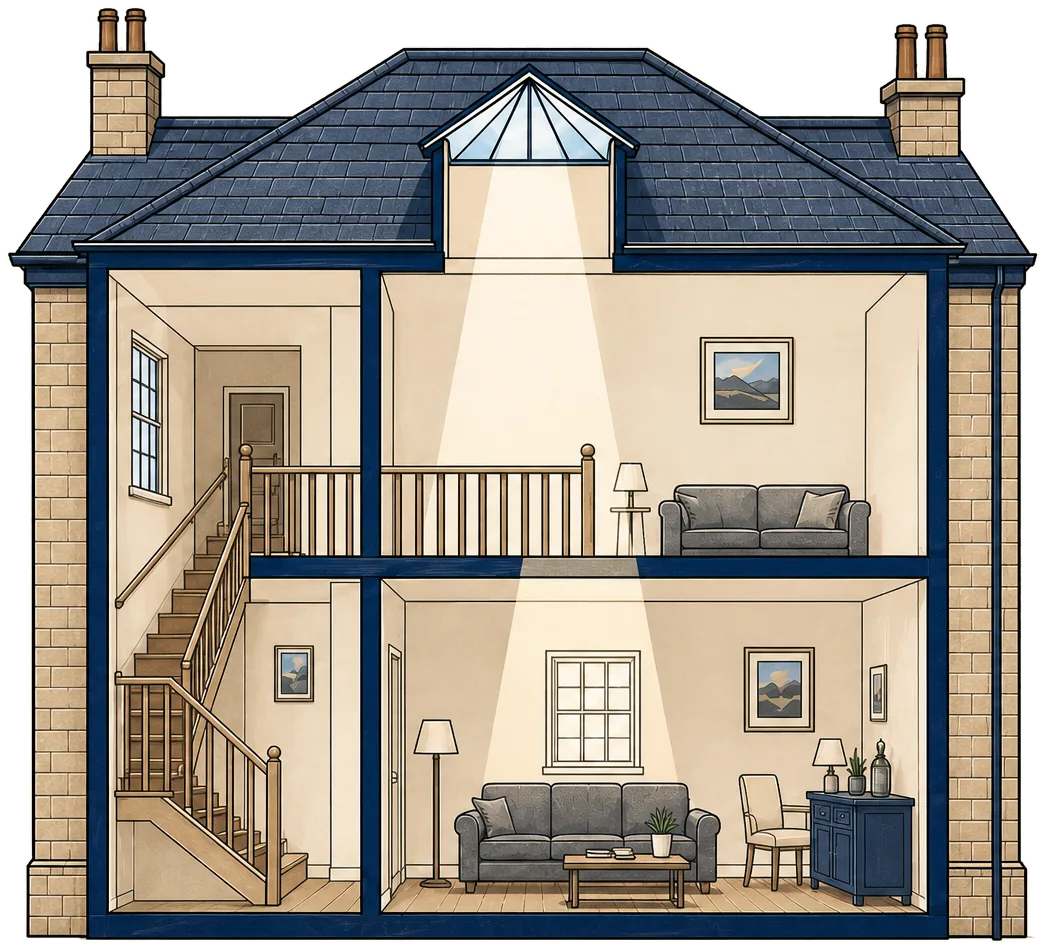
The rooms that Snaith's brick and pantile houses leave short of daylight
On open land at the edge of the East Riding, houses and outbuildings have rooms the wall windows barely touch.
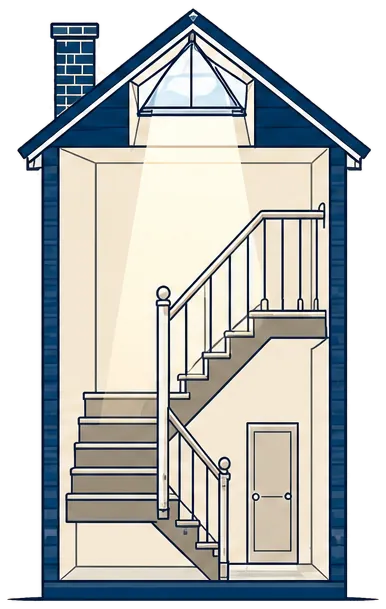 Landing and hallA hall running through the middle of a house gets light from one door, if that.
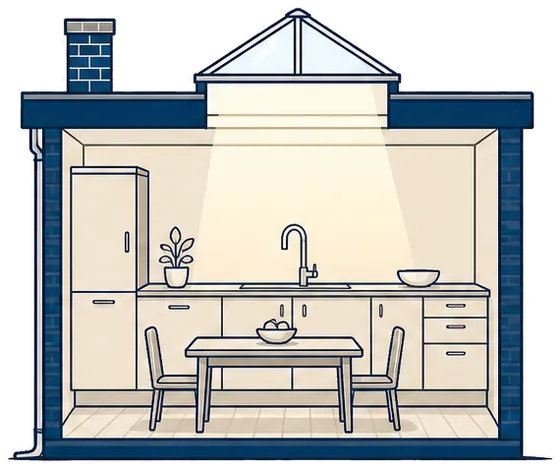 Deep back roomAn extension added behind the original house leaves its inner half far from the garden glass.
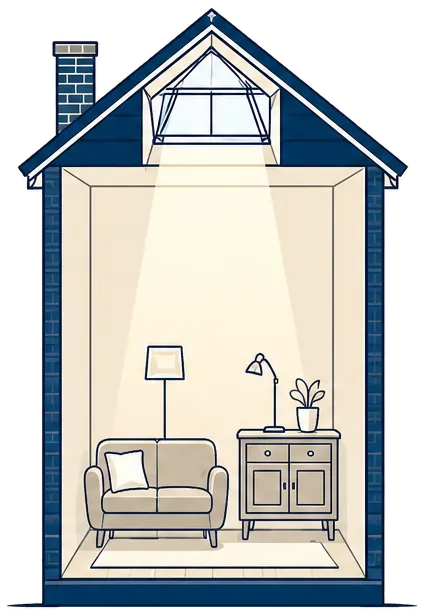 Converted outbuildingA former barn or store turned into a room keeps thick walls and very few windows.
Rooflights to suit Snaith's clay pantiles and flat extensions
Curved clay tiles, concrete tiles on later houses and felt or fibreglass on the flat roofs each take their own unit.
-
 Roof Windows
A roof window above a landing or loft bedroom, with a flashing kit cut to the shape of the pantile.
Roof Windows
A roof window above a landing or loft bedroom, with a flashing kit cut to the shape of the pantile.
-
 VELUX Windows
VELUX units are available in many sizes, with flashings made for profiled tiles such as pantiles.
VELUX Windows
VELUX units are available in many sizes, with flashings made for profiled tiles such as pantiles.
-
 Flat Roof Rooflights
A flat rooflight for the roof of a rear extension or a converted outbuilding.
Flat Roof Rooflights
A flat rooflight for the roof of a rear extension or a converted outbuilding.
-
 Roof Lanterns
A lantern over an extended kitchen or dining area where the room is wide enough to carry one.
Roof Lanterns
A lantern over an extended kitchen or dining area where the room is wide enough to carry one.
-
 Sun Tunnels
A tube carrying daylight from a pantile roof to a hall, landing or bathroom with no window.
Sun Tunnels
A tube carrying daylight from a pantile roof to a hall, landing or bathroom with no window.
Pantile roofs and converted outbuildings in Snaith
These answers cover fitting a window into curved clay tiles and the planning position near the priory church, then lighting a converted outbuilding.
Can a roof window go into a clay pantile roof?
Clay pantiles cover older Snaith roofs, including listed houses on Church Lane. Each tile has an S-shaped curve, so the roof runs in ridges and troughs rather than flat rows. That shape is part of what makes the local roofs look the way they do, and it also means a window has to be weathered differently from one in a plain tile or slate roof.
Why the flashing is different
On a flat slate or tile, the flashing lies down and the next course covers it. On a pantile roof the troughs let water run down in channels, and the gaps beside the frame have to be filled so that those channels meet the frame cleanly. Roof-window makers supply flashing kits designed for profiled tiles, with soft apron pieces that mould to the curve. The kit and the frame come as a pair, and we pick the right one by looking at the tiles.
Cutting and relaying
Pantiles are lifted around the opening and set aside. The ones that need cutting to meet the frame are cut cleanly, and spare tiles from elsewhere on the roof can make up any shortfall. Matching old clay is not always easy, as the colour weathers over the years. Moving a tile from the back of the roof to the front can leave a visible difference, so we ask where matching spares can come from.
Colour and age
Clay pantiles weather from a bright orange-red to a deeper, mottled brown. New tiles cut for the frame look different from the old ones around them for a while, but the contrast fades. A dark frame draws the eye less than a pale one on an old roof, and the survey is a good moment to choose the finish.
Sizes and positions
A roof window is sized to fit between rafters, and the pantile courses decide where its edges meet the tiles. That is one reason we look at the roof before settling the unit's size.
The room under the tiles
What lies under the tiles varies from house to house: battens alone on some older roofs, a felt layer or boarding on others. We look at that layer, because it affects how the frame is sealed and how the light well is lined.
Once the frame is in, the reveal inside is plastered and finished to the standard in the quote.
Pantile roof words
- Pantile
- A clay or concrete roof tile with an S-shaped curve, laid in overlapping rows.
- Trough
- The low part of the curve, where rain runs down the roof.
- Apron
- The part of the flashing below the frame, moulded over the tiles.
- Batten
- A thin timber across the rafters that the tiles hook onto.
Is a rooflight possible near Snaith's priory church and old streets?
Snaith has an old centre around its priory church, with older buildings among the brick houses of later years. The council that covers the town is East Riding of Yorkshire Council, and any question about a rooflight on an older or listed building goes there.
A house on one of the town's newer streets is a different matter, and may well be able to add a rooflight under permitted development. Planning permission for skylights lists the conditions that apply, and we check them against your house on the survey.
What to find out first
- Listing. A listed building needs consent for a new rooflight on any slope.
- Designation of the street, including any Article 4 direction that removes the usual rights.
- Use of the building. A flat sits outside the permitted rights for roof work, and the council is the one to ask.
The kind of unit that fits an old roof
On a traditional roof, a conservation rooflight is the sensible choice: a slim frame, usually black, set low and often with a central bar. Against clay pantiles a dark frame blends well, and the glass sits close to the tile line. A rear slope hidden from the street makes the conversation with the council easier.
Streets near the priory church
Whether a street near the priory church sits inside a conservation area is something East Riding of Yorkshire Council can confirm, and we ask it first. Units that sit low and are finished in dark tones read as part of the roof. A rear slope facing a back garden is usually less conspicuous for a rooflight than a slope facing the churchyard.
Older houses and their roofs
An old house may have been re-roofed in parts over the years. Timbers may be irregular, and the tiles may differ from one slope to the next. On the survey we go into the loft to see where the rafters run and how sound they are, and a position is picked from there. A loft visit tells us whether an old rafter can take a new frame or needs a new trimmer alongside it.
Where an application is required, it comes before any order, and it describes the same unit that the quote names.
- Myth: An old house cannot have a modern rooflight.
- Fact: A conservation-style unit with a slim dark frame is made for older roofs and often suits them.
- Myth: Pantiles rule out a roof window.
- Fact: Makers supply flashing kits shaped for profiled tiles, so a roof window can be weathered properly.
How do we get daylight into a converted outbuilding?
Around Snaith there is farmland, and farm buildings turned into something else are a familiar sight: a games room, an office, a granny annexe, a workshop. They share a problem. The walls are thick, the windows are small or few, and the room is lit from one end.
A rooflight changes that, because the roof is the one surface with nothing in the way. A unit above the middle of the room lights the floor evenly, and the walls no longer need extra openings.
What the roof is made of
Outbuilding roofs vary widely. Pantiles or slate on a pitch suit a roof window, with a sun tunnel as the choice for a small room. A lean-to or flat roof in felt, rubber or fibreglass takes a flat rooflight set on a kerb. Corrugated sheet is a third case, where the frame has to follow the wave. We look at the roof before we say what suits.
Weight and frames
Old outbuilding roofs were built to carry the covering and little more. The timbers may be thinner than in a house, and the opening has to be framed with this in mind. We check what is there and where the load goes round the opening. A rooflight does not weigh a great deal, but a framed opening needs sound timber.
Light across the whole floor
A single rooflight above the middle of a square room lights every corner, while a window in one wall serves only the side it sits in. For a long narrow building, two smaller units spaced along the ridge or the flat can even out the light better than one large one. We stand in the room and work out how far the light needs to travel.
Holding the heat in
A converted room has to keep its heat. A glazed unit that meets today's limit, 2.2 W/m²K for a rooflight, keeps heat in far better than a plain sheet. With the kerb insulated, the roof stays tight round the opening.
Planning and use
Permitted development covers houses and the buildings that serve them in particular ways, so we establish how the building is used. A converted outbuilding that is now a separate dwelling follows different rules from one used as part of a house, and East Riding of Yorkshire Council can say which applies.
The roof and the use of a converted outbuilding
What the roof is made of, how thick the timbers are, and whether the building is part of the house or a separate dwelling.
Snaith and the towns around the Aire and Ouse
Our work from Snaith runs to Brayton, Selby, Thorpe Willoughby, Askern, Knottingley, Ferrybridge, Adwick le Street and Bentley. Ring 0113 436 0654 to book a free survey in any of these places.
Further Snaith answers on pantile roofs and flat extensions
Will a black frame look right against red pantiles?
A slim black or dark grey frame set low in the roof looks right against red pantiles and draws little attention. A rear slope hides it from the street altogether. Colours and finishes are agreed at the survey so the unit in the quote matches your roof.
Is the open land around Snaith a problem for a rooflight?
Exposed sites are covered by choosing a unit and flashing that suit the roof, and by securing the frame firmly to the rafters. A well-weathered frame sheds rain from any direction, and we note how the house sits in the open before the unit is picked.
Who sends the Building Control notification for a new opening?
We make the notification, and it goes either to the East Riding of Yorkshire Council building control team or to a registered building control approver. You do not have to arrange anything with either of them.
Can you replace a rooflight in a flat extension roof?
A flat rooflight in a felt, rubber or fibreglass roof can be taken out and replaced with a new unit on a new or reused kerb. The covering is dressed up the kerb again, and the glazing meets the current limit for a rooflight.
What happens to the tiles taken off the roof?
Sound tiles are stacked on the roof or in the garden and relaid around the new frame. Any that crack are replaced with the closest match we can source, and the spare tiles from the roof's own back slope can be used if they will not be missed.
Get a free survey
- No obligation
- We survey before we price
- WhatsApp or phone, whichever suits
We arrange a survey, then send a fixed written quote. Nothing is booked until you say yes.