Sun tunnel installation in Leeds
Sun tunnel installation in Leeds for the landing, hallway or internal bathroom with no wall window: a dome on the roof, a reflective tube through the loft and a diffuser in the ceiling.
- Free survey and fixed written quote
- Planning checked before we order
- Building Control notification handled
- 10-year workmanship guarantee
Sun tunnels, Leeds and around
Eight sun tunnel questions, from the landing to the loft run
What a sun tunnel is, which rooms it suits, how it is routed and fitted, and what to check before you book.
What is a sun tunnel skylight, and which rooms is it for?
A sun tunnel is also sold as a sun pipe or a tubular skylight, and the three names mean the same thing. A clear dome on the roof catches daylight, a reflective tube carries it down through the loft, and a diffuser in the ceiling spreads it across the room. Sun tunnel installation in Leeds mostly means answering one question: which room in this house is the darkest, and what sits above it?
A sun tunnel is the narrowest way to get daylight through a roof. The dome on the outside is small and the diffuser inside looks like a round ceiling light, so there is no big opening to frame and no new window to dress.
The rooms it suits
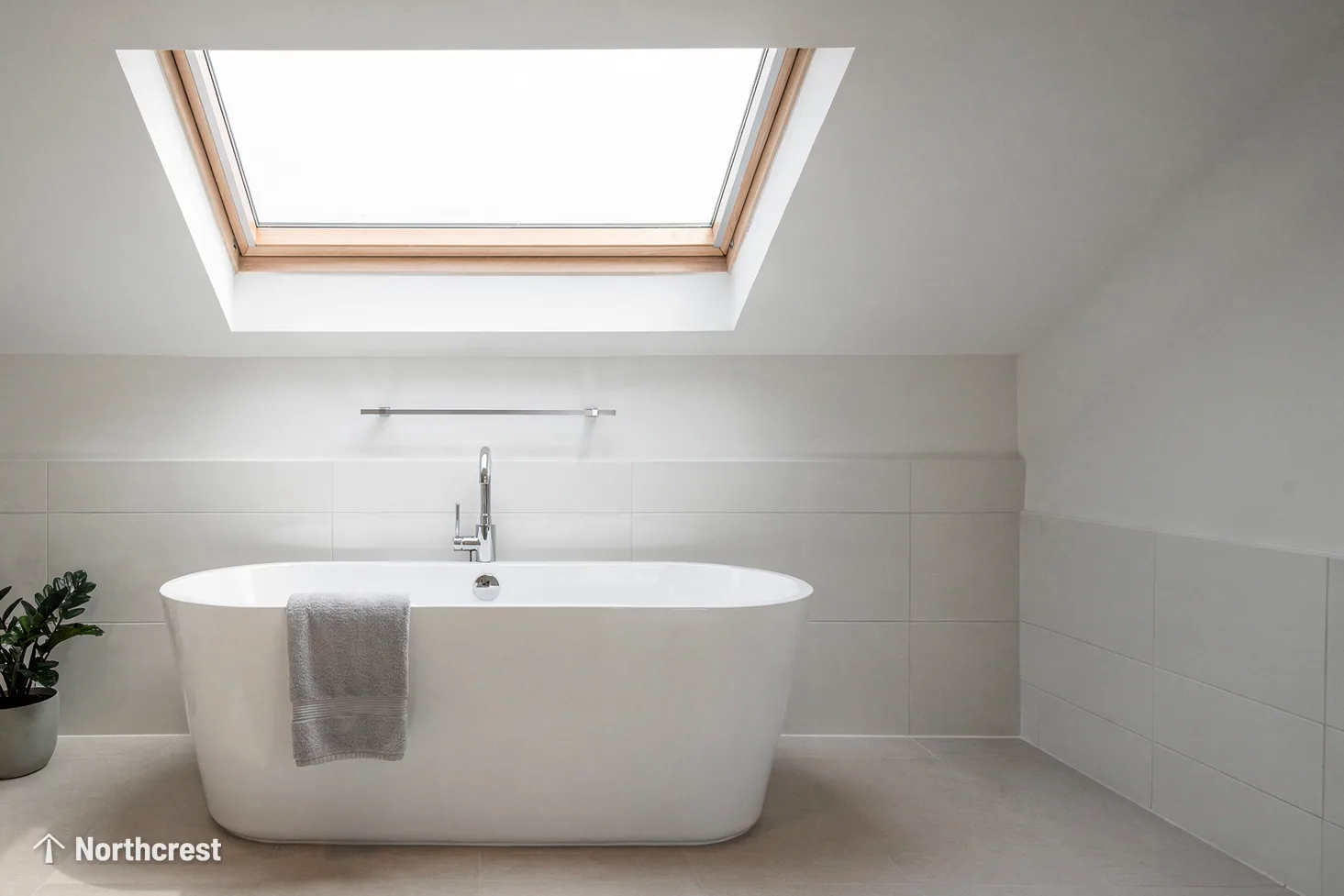
- An internal bathroom, where the room sits in the middle of the floor plan and has no wall to the outside.
- A landing or stairwell with no window of its own, where daylight arrives only through bedroom doors.
- A hallway that runs between two rooms and meets the front door at one end only.
- A utility room, walk-in wardrobe or box room tucked under the roof.
Why these rooms stay shaded
Each of these rooms has hardly any outside wall that could take a window. A window needs an outside wall, and these rooms are surrounded by other rooms, so the only face open to the sky is the roof above. Newer houses and loft or extension conversions often put the bathroom in the middle of the plan, and Leeds terraces leave the middle of the house and the landing in the same position. Our darkest room first page shows how every survey begins at that room and works up to the roof.
How the room benefits in light and space
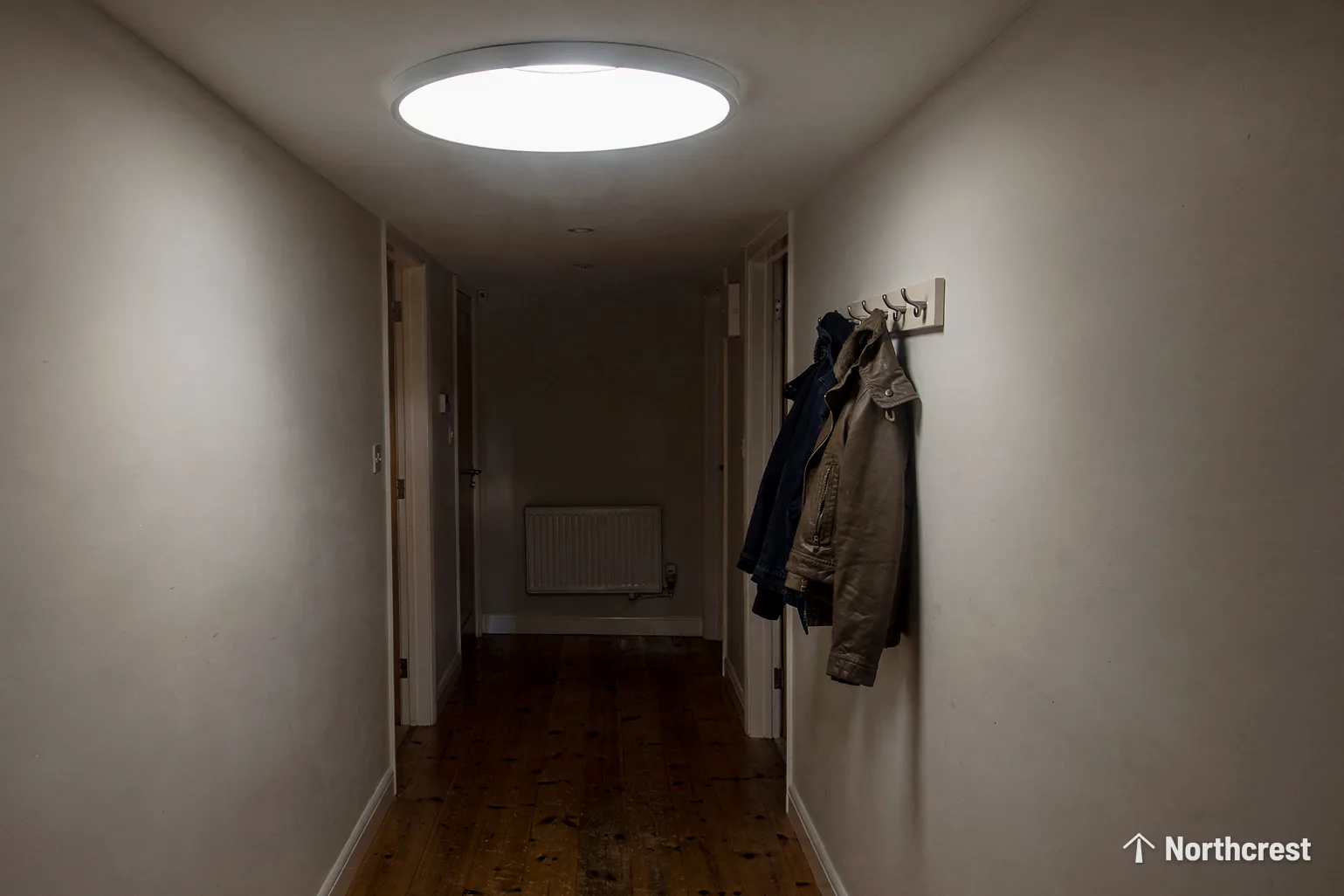
The light gain is natural daylight in a room that had none, and the room looks and feels different once the diffuser is lit by a bright sky. The space gain is that nothing is lost: no floor space goes to a new window seat or a stretch of wall to a frame. A tidy white diffuser in the ceiling is also easy to live with and to keep clean from below. A sun tunnel does not open, so the bathroom keeps its extractor fan for ventilation and gains daylight as well. Any effect on value varies with the house and the street, though a bathroom that gets daylight in the morning is a gain in daily use.
Heard at the door
What sits above the ceiling and around the room
What types and options of sun tunnel are there?
The short answer
Sun tunnels differ in the roof they suit, the tube they use and the diameter they come in. We choose the unit from the room and the route above it.
Three choices shape a sun tunnel, and a survey settles each one in turn: the dome and flashing for your roof, the tube between roof and ceiling, and the width of the whole run. The tube is either rigid or flexible, and the choice depends on the sun tunnel routes through the loft.
What changes from one sun tunnel to the next
The choices below are the ones that change how much light reaches the room.
The dome and its base
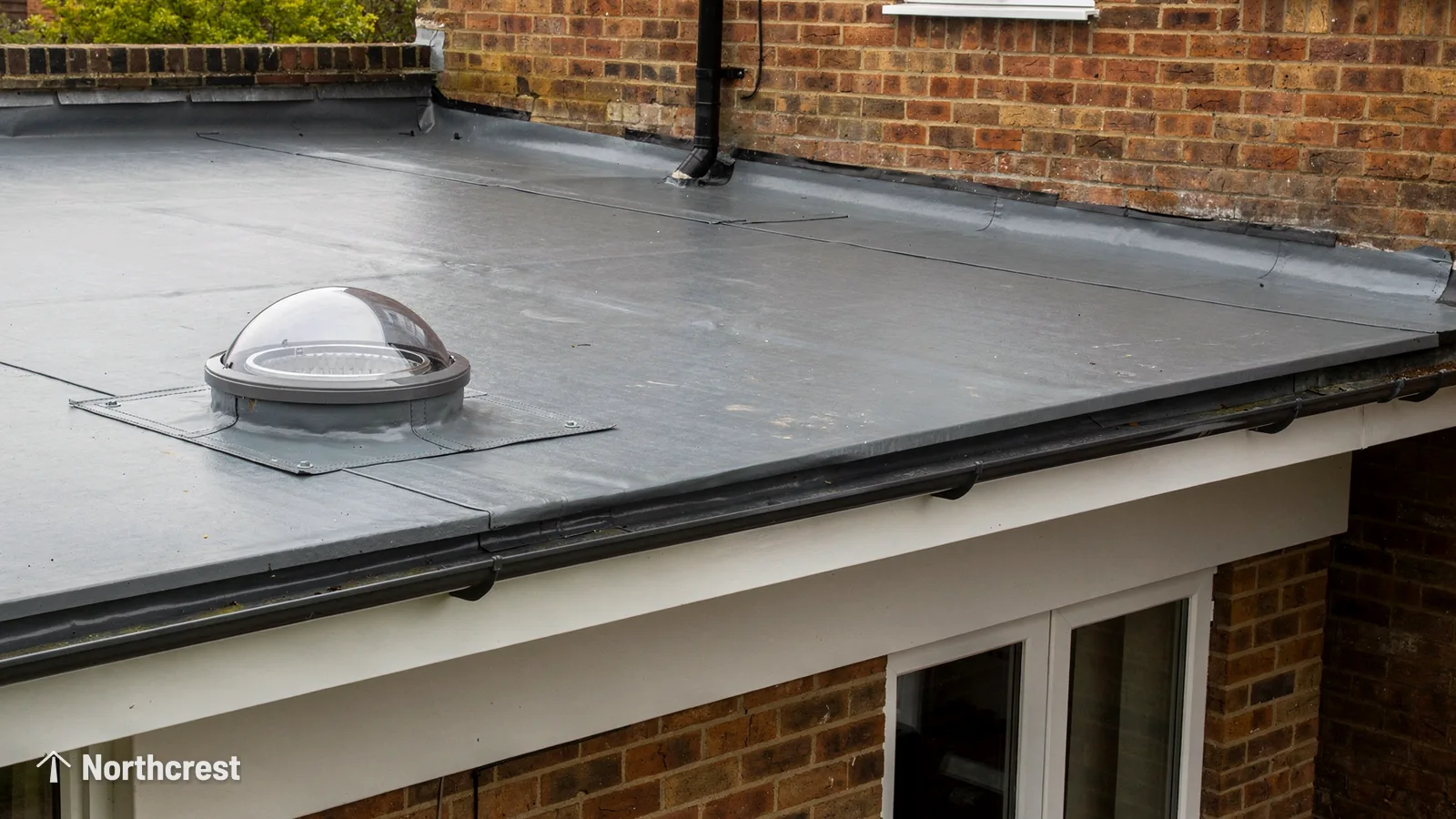
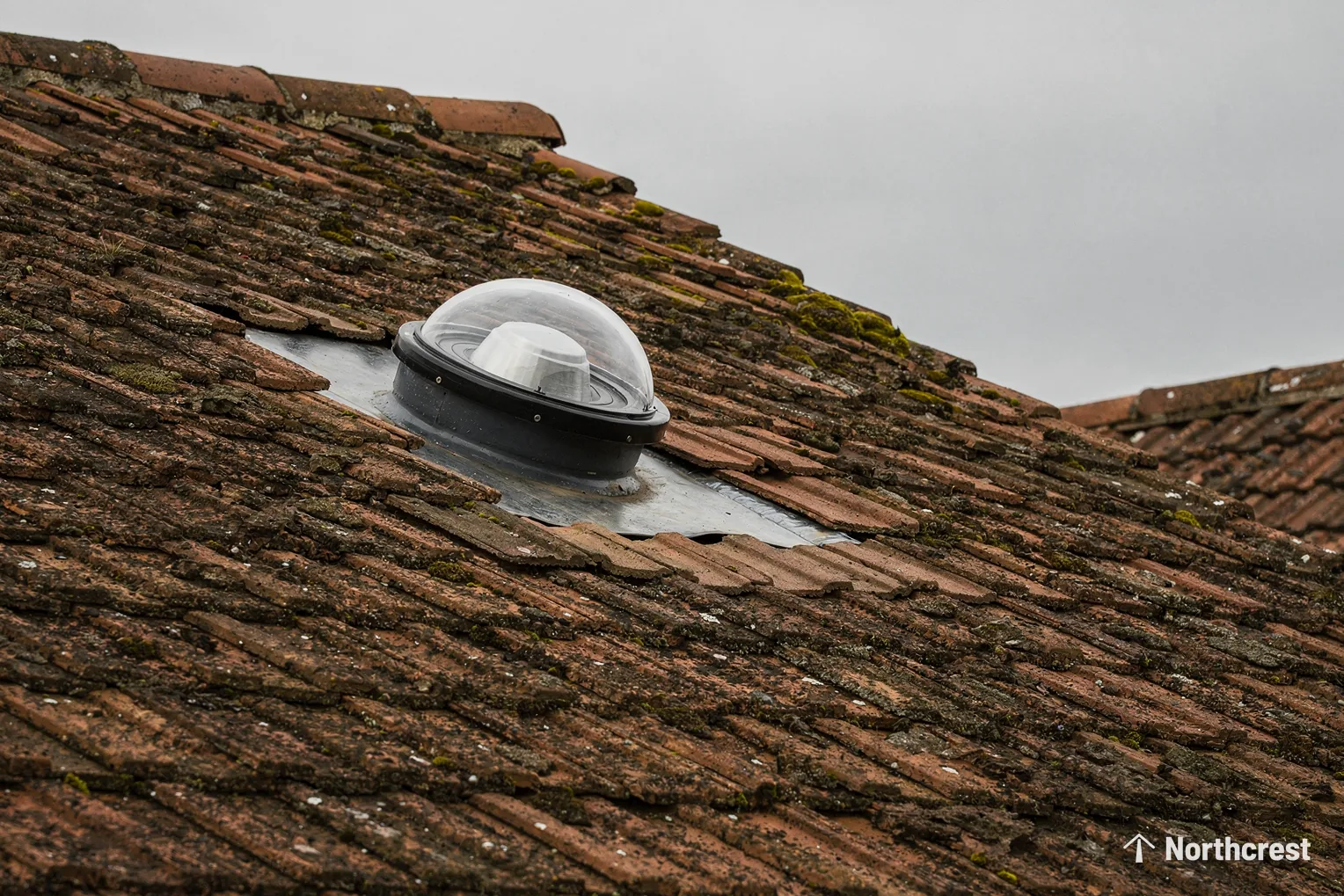
The dome sits on a base that has to suit the roof covering. Pitched roofs take a flashing shaped to the tiles or slates, and a flat roof takes a low upstand that the felt, EPDM or GRP covering is turned up against. Makers sell the two as separate versions of the same unit, so the covering on your roof settles which one is ordered.
Rigid or flexible tube
Rigid tubes are straight lengths with angled elbows, and on a run of equal length, a rigid tube delivers more light to the room than a flexible one does. A flexible tube bends round obstacles with fewer joints, which helps where the loft is crowded. The right pick depends on the route, and the next chapters come back to it.
Diameter
Makers offer several widths. A wider tube lets more daylight through, and a narrower one fits between closely spaced rafters. Each maker gives its own size names, so we work from the maker's drawing and write the unit and its size into the quote.
Options at the diffuser
Some makers offer a light kit that fits at the diffuser, so the same ceiling fitting gives an electric light in the evening. If you want one, say so at the survey, because a cable has to reach the diffuser before the opening is made good.
What the choice depends on
| Choice | What sets it | What we check |
|---|---|---|
| Dome and base | Roof covering | Tile, slate, felt, EPDM or GRP |
| Tube | Distance and bends | Loft height and the route taken |
| Diameter | Room size and rafter spacing | Gap between rafters or joists |
| Diffuser | Ceiling and lighting | Cable route if a light kit is wanted |
Can a sun tunnel go on any roof, flat or pitched, slate or tile?
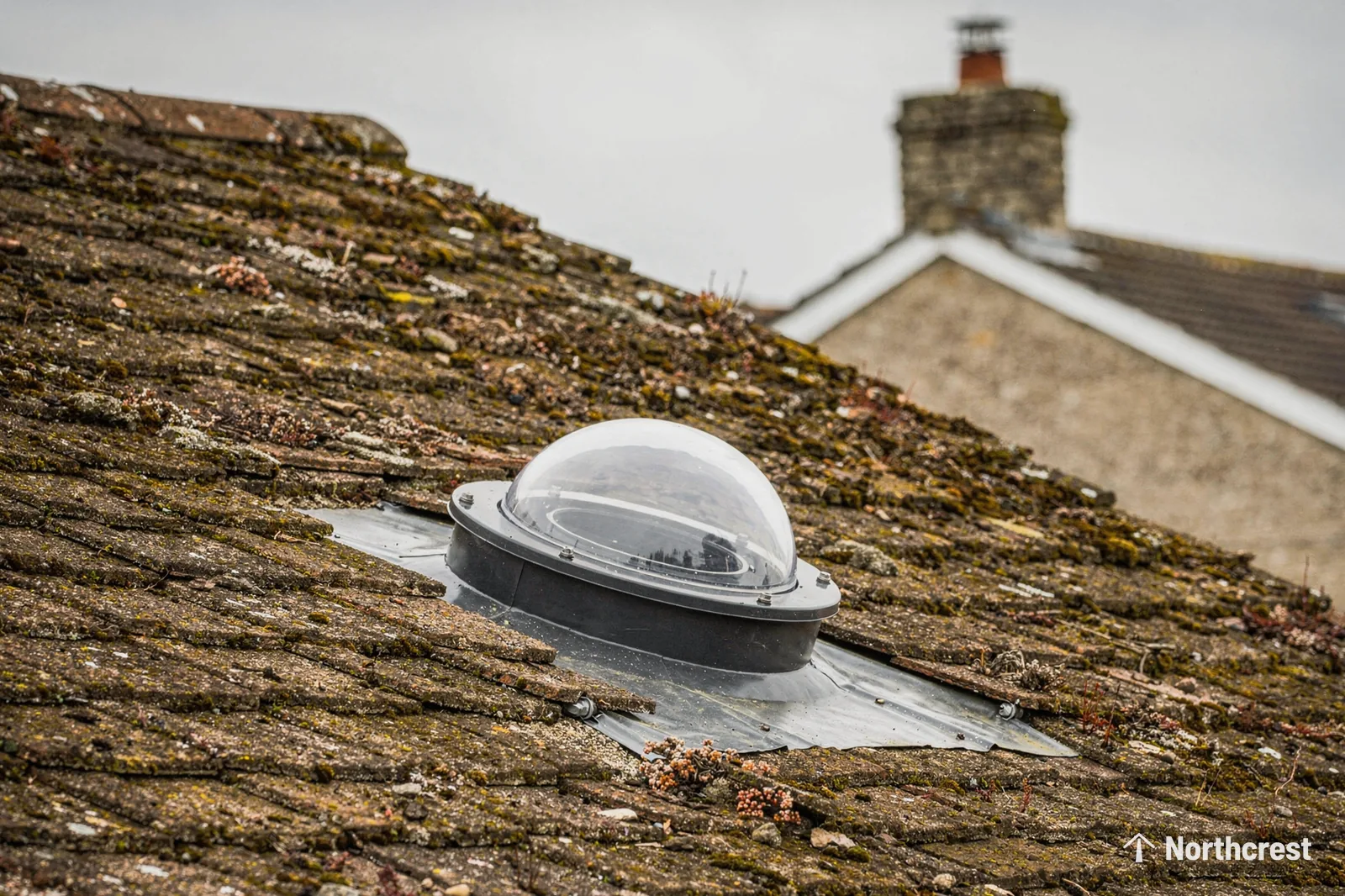
The roof covering matters more than the pitch. Water has to run round the dome without finding a way under it, so the base is weathered into whatever the roof is made of.
Pitched roofs: slate and tile
On a pitched roof, a sun tunnel is fixed between the rafters, with a flashing dressed into the tiles or slates around the dome. Welsh slate on a Victorian villa or a terrace takes a flashing laid in with the courses, and slates have to be lifted and re-laid round it. Concrete tiles on an inter-war or later house are quicker to lift and replace. A stone-tiled roof on an older gritstone cottage is heavier and more fragile, so we look at how the stones are hung before we promise a position.
A south-facing slope gathers more direct sun than a north-facing one, though the dome collects daylight on any aspect.
Heard at the door
Asked before the survey
Flat roofs
On a flat roof, the dome sits on a short upstand, and the covering is turned up it and sealed. A flat roof over a back kitchen or an offshot is a common place for a sun tunnel to land, because the tube is short and the loft space is often shallow. Where a flat roof is old and due to be re-covered, it makes sense to plan the sun tunnel with the new covering, so the weathering is done once. For larger glazed units on a flat roof, our flat roof rooflights page covers the choices.
Where the dome goes on the roof
The dome sits where the tube can run straight down to the diffuser, and a short, straight run carries more light than a long one with several bends. A dome on the shaded side of a chimney or a taller neighbouring wall collects less light, so we look at what shades the roof before choosing the spot.
How does the loft affect the light, and what about insulation?
The loft run sets how much light reaches the room. Daylight loses a little at every bounce inside the tube, so a longer run and more bends mean a softer glow in the room below. A short, straight drop from a dome over the bathroom gives the strongest light, and a long run across a roof space gives less.
The loft also has to be seen from the inside. We go up before the quote is written to see what fills the space above the ceiling: the rafters, the ceiling joists, any water tank, boarding, wiring and the insulation laid on the floor.
Insulation round the tube
A tube passing through a cold loft has cold air all round it. Where the tube runs through the loft insulation, the insulation is kept in place around it, and the maker's instructions say how the tube is wrapped in a cold roof space. Keeping the tube insulated limits heat loss and helps to stop condensation forming on its walls.
What the ceiling sees
At the ceiling, the diffuser is set into a neat opening, and the gap round the tube is sealed. Heat from the room should not find its way up the tube into the roof void, so the seal at the ceiling matters as much as the dome.
A loft that is being converted
If the loft above is about to be boarded or turned into a room, tell us at the survey. A sun tunnel through a floor you are about to use has to be routed differently, and the work may be better planned alongside the conversion. Where a roof window can serve the loft room itself, our roof window installation page explains the pitched-roof option.
- Sealed unit: two panes with a warm-edge spacer
- Insulated kerb lifting the unit clear of the roof
Should I choose a sun tunnel or a roof window?
The short answer
A roof window suits a room that sits right under the slope and opens for fresh air, while a sun tunnel reaches rooms that do not and gives daylight only.
Both bring natural light through the roof, and which one fits depends on where the room sits. A roof window is a pane of glass set in the slope, so the room has to sit directly below that slope, such as a loft bedroom or a landing at the top of the stairs under the eaves. A sun tunnel can reach a room that is further from the roof, because the tube carries the light across the loft.
The other difference is what you get in return. A roof window opens and lets air in. A sun tunnel gives daylight and nothing else, which suits a bathroom that already has an extractor. Each room settles it differently, and choosing between a sun tunnel and a roof window sets out the decision room by room.
Heard at the door
Questions we put to a room
Which manufacturers and brands of sun tunnel we fit
VELUX is a brand of roof window with a wide range, and people searching for a sun tunnel often meet the name first. VELUX units and other makers' units both go in, and the quote names whichever suits your room and roof. If a roof window is the better answer, our VELUX window installation page covers it. A maker's name tells you about its range and its accessories, such as the diffuser and the light kit, so tell us which accessories you want and we match them to your roof.
Cases where both are worth a look
A bathroom directly under a slope can take either. The roof window gives light and fresh air, and the sun tunnel gives light with a smaller opening and no change to the roof's line from the street. The sun tunnel is also the lighter job on a conservation-area roof where a visible window may be harder to agree, though the council is asked first in either case. We weigh the two against the room, the roof and your preference before the quote is written.
How is a sun tunnel installed, and what happens on the day?
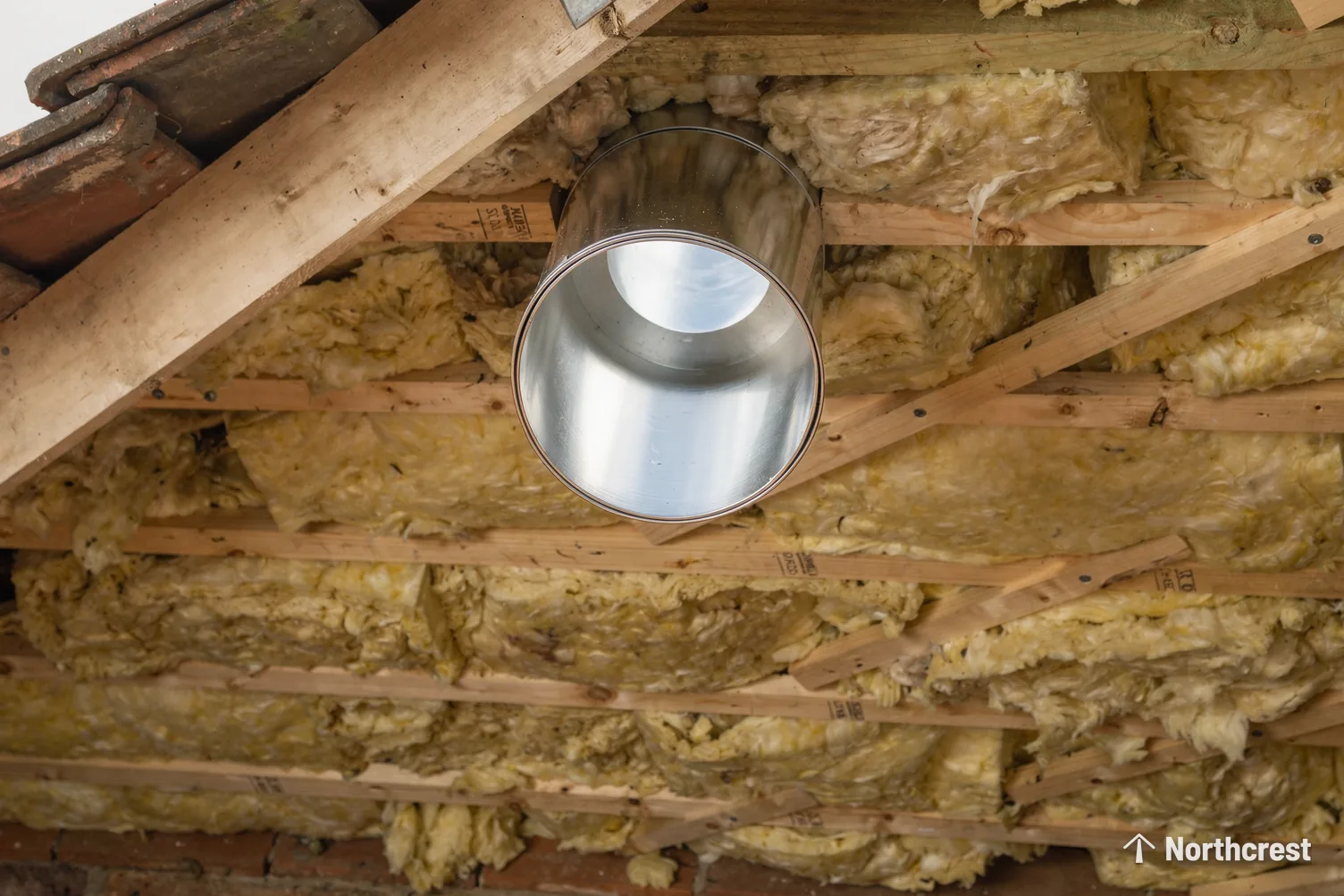
Our guide on how a sun tunnel is installed follows the job step by step, and the order runs as follows.
- The floor of the room is sheeted, and anything fragile is moved out.
- The centre of the ceiling opening is marked, and a line is taken up through the loft to find the spot on the roof.
- On the roof, the covering is opened round the marked spot, and the dome base is fixed to the rafters or to the upstand.
- The flashing is dressed in and the dome is set in place, so the roof is weathered before the inside work goes on.
- In the loft, the tube is cut to length and fitted, with elbows where the route bends, and its joints are taped.
- At the ceiling, the opening is cut, the diffuser is fixed and the gap round it is sealed.
Heard at the door
Asked before the survey
Mess and time
Cutting a ceiling makes dust, so the room and the landing outside it are covered. Because the opening is small, the work is smaller than a roof window, though you should still expect the roof and the loft to be worked on from a ladder or scaffold access, depending on the house.
Making good
Once the diffuser is in, the edge of the opening is made good with filler and finished to the ceiling around it, so the room is left tidy.
When a rafter or joist is in the way
A sun tunnel can normally be routed between the rafters, and where a rafter or ceiling joist does have to be cut, the work alters the roof structure and becomes structural, so it is notifiable. We handle the notification, and any trimming is carried out so the load goes round the opening.
Do you need planning permission or Building Control approval for a sun tunnel?
Permission for a sun tunnel depends on the building more than on the product. A dome on a house roof is often permitted development when it stays within the conditions for roof alterations. For a flat or maisonette the general rights do not reach roof alterations, which usually means applying for permission, so ask the council first. An Article 4 direction can remove those rights in certain conservation areas, and in a listed building the council must give consent before any new rooflight goes in. Our answer on whether a sun tunnel needs permission goes through the cases, and the statutory conditions are set out in full under planning and Building Regulations.
Building Regulations
A new roof opening alters its structure, which falls under Approved Document A and is notifiable building work. A replacement unit is notifiable under Part L. In each case we notify Building Control, whether the building control body is the council or a registered building control approver.
Checking before we order
Planning and conservation-area points are looked at before any order goes in, so you are not left holding a dome that the council has not agreed. For a house in Leeds the planning authority is Leeds City Council, and for a home further out it is the council for that town. If your house is in a conservation area, tell us at the first call and we will start there.

Where the answer changes
| Building | Permitted development | Next step |
|---|---|---|
| House outside a conservation area | Often applies to roof alterations | We check the conditions at survey |
| House in a conservation area | May be removed by an Article 4 direction | Ask the council before ordering |
| Flat or maisonette | No rights for roof alterations | Permission is usually needed |
| Listed building | Does not replace consent | Listed building consent first |
What goes into the cost of a sun tunnel, and what does the quote cover?
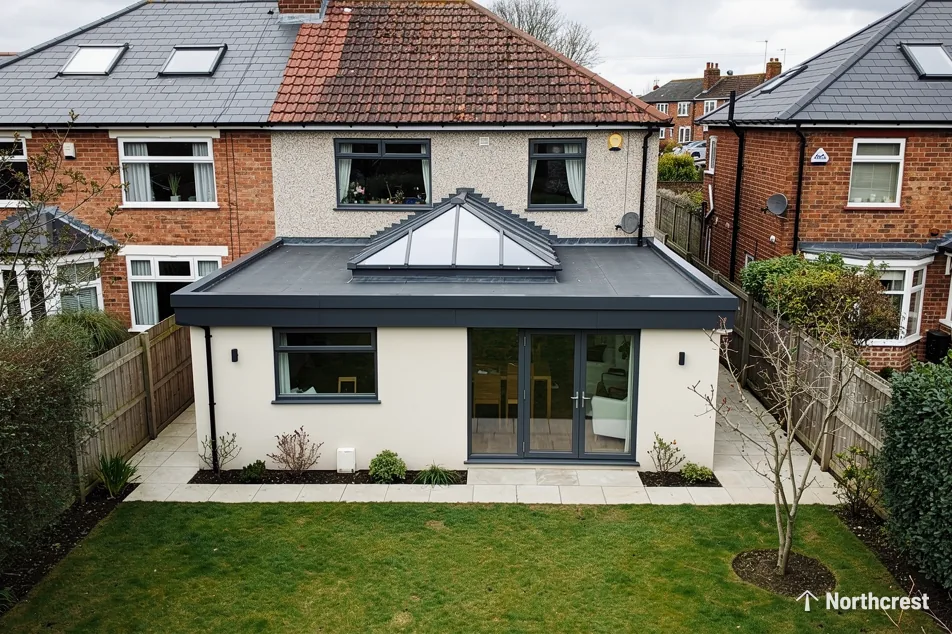
Figures for a sun tunnel vary because the job is not the same on every house, so we quote only after a survey. The factors are set out in the cost of installing a sun tunnel, and our costs page explains how a quote is built.
The cost factors that matter on a sun tunnel
Two things matter most on a sun tunnel. The first is the route: a short, straight drop through an open loft is less work than a long run with elbows round a water tank. The second is the roof: slate that has to be lifted and re-laid round the dome takes longer than a flat roof where the dome sits on a prepared upstand. Access comes next, since a roof reached only by scaffold is slower than one reached from a ladder.
The written quote
After the survey you get a fixed written quote. The document states which room is lit and which unit goes in at what size, and the price in it is the price you pay. If you want the light kit, a particular diameter or a particular maker, tell us before the quote is written so it is named in the same document.
Comparing quotes
Another firm's figure may cover a different unit, a different tube or a different finish to the ceiling. When you compare two, check that each names the room lit, the unit chosen and its size, because a quote without them is hard to weigh against one that has them.
Who fits it, and what do you get at the end of the job?
The short answer
We install sun tunnels for homes in Leeds and in the towns up to 30 road miles away. A free survey comes first, then a fixed written quote, and the finished job carries our 10-year workmanship guarantee.
Northcrest Skylights installs and replaces skylights and rooflights for homes across Leeds, and in the towns and villages within 30 road miles of the city. Small commercial jobs on the same units are welcome as well. A sun tunnel is one of the smaller jobs we do, and it follows the same order as a larger one, from the survey to the finished ceiling.
The survey and the written quote
There is no charge for the survey. We look at the room from inside, then the loft, then the roof. The fixed written quote that follows is built around that room, with the sun tunnel and its size written in. We look into planning before ordering, and we notify Building Control wherever the work calls for it.
Heard at the door
What to have ready for the survey
The finish
When the diffuser is in, the opening is made good, and the plastered reveal is finished to the standard the quote sets out. You are left with a tidy ceiling and no raw edge for another trade to deal with.
Ventilation, upkeep and the guarantee
A sun tunnel gives daylight and no ventilation, so a bathroom keeps its extractor or opening window. Upkeep is light: wipe the diffuser from below, and leave the dome to the rain. If a dome or its flashing ever fails, the answer is a replacement, and we handle replacement as well as installation. The 10-year workmanship guarantee applies to the installation itself, and the warranty on the unit itself comes from its maker.
To start, send the details through our quote form, naming the room that is darkest.
Smaller sun tunnel questions before you ring
Does a sun tunnel let in heat in summer, or lose it in winter?
A sun tunnel brings in little heat in summer and loses little in winter when the tube is insulated through the loft and the diffuser is sealed to the ceiling. Makers publish thermal figures for their own units, and those are the place to compare models.
Will a sun tunnel work at night or on a dull day?
A sun tunnel collects daylight, so on a dull day the room is still brighter than it was, though not as bright as on a clear one. After dark nothing comes down the tube, which is why some people add a light kit at the diffuser.
Can I fit a blind or shade to a sun tunnel?
Some makers offer a shade or a closing diffuser for a bedroom, so that early light can be cut off. If you want one, tell us before the quote is written so the unit named in it includes the fitting.
Does the dome get dirty or cloud over with condensation?
A dome on the roof collects dirt like any glazing, and rain rinses it. If moisture appears inside the dome or on the tube, tell us and we will trace where it comes from; a dome or base that has failed is replaced with a new one.
Can a single house take a roof window as well as a sun tunnel?
A house can take both types together, and we note every dark room at the survey, so the quote can name more than one unit, such as a sun tunnel for the bathroom and a roof window for the loft bedroom.
Does the whole sun tunnel installation carry a guarantee?
The fitting of every sun tunnel carries our 10-year workmanship guarantee. Any warranty on the unit itself comes from its maker. The details are on our guarantee page.
More on sun tunnels





Get a free survey
- No obligation
- We survey before we price
- WhatsApp or phone, whichever suits
We arrange a survey, then send a fixed written quote. Nothing is booked until you say yes.