The answer
The electric rooflight cost depends on the size of the unit, the motor and rain sensor it carries, the controls, the electrical connection and the roof it goes into. A large unit in a tiled slope with a long cable run costs more to install than a small one on a flat roof beside a power point. We give a fixed written quote.
Size and glazing set the starting point
An electric opening skylight is a rooflight first and an electric unit second, so the same things that set the cost of any rooflight apply here. The larger the opening, the more glass, the bigger the frame and the more roof has to be cut and weathered. A bigger sash also asks for a stronger motor and longer arms or chains to move it.
Glazing moves the figure as well. A unit with a solar-control coating, which cuts the heat of summer sun, or triple glazing, which loses less warmth, costs more than a plain double-glazed unit of the same size. Which of those is worth having depends on the room (the energy efficient rooflights section compares them), and a south-facing loft room asks different questions from a north-facing landing.
Size also shapes how the opening is dealt with in the roof. A wide opening across a flat roof interrupts more joists, and a wide one in a pitched roof may interrupt a rafter, which means extra structural work around it. Two units with similar sashes can therefore sit at different points in the range.
Where the unit replaces an old one of the same size, the opening already exists and the work is smaller. Where a larger unit replaces a small one, the roof has to be opened up to suit it, and the extra structural work counts as part of the job.
The motor, the rain sensor and the controls
What makes a unit electric is the motor, and the motor is the part that adds cost over a manual rooflight. A model that opens a long way, or lifts a heavy sash, carries a larger actuator than one with a short stroke. Solar models add a cell and a battery in place of a mains supply, and the figure moves with them.
On some models a rain sensor is an extra, and it is worth weighing, particularly where nobody is home to shut the glass in a shower. Controls are the third piece. A single wall switch is the simplest. A handheld remote, several units on one remote, or a keypad for a high stairwell each add to the specification. The differences between the three ways of opening are set out in the comparison of electric, solar and manual units, and what a rain sensor does explains the sensor in full.
The electrical connection
A mains unit needs a cable from the house supply to the rooflight, and the length and difficulty of that run affects the cost. A unit in a new extension ceiling, where the cable goes in before the plaster, is straightforward. A unit in a finished ceiling can mean chasing a route across the loft and down a wall to the switch. Electrical work is carried out by a qualified electrician.
A solar unit avoids the cable altogether, so it is often the answer for a finished ceiling or a room where the decoration is new. Whether that saves money overall depends on the model and the room, and it is worth asking about both when the options are set side by side.
The position of the switch matters too. In a bathroom the wiring rules restrict where switches may go near the bath or shower, so the cable route may need to reach a spot outside those zones.
The roof it goes into
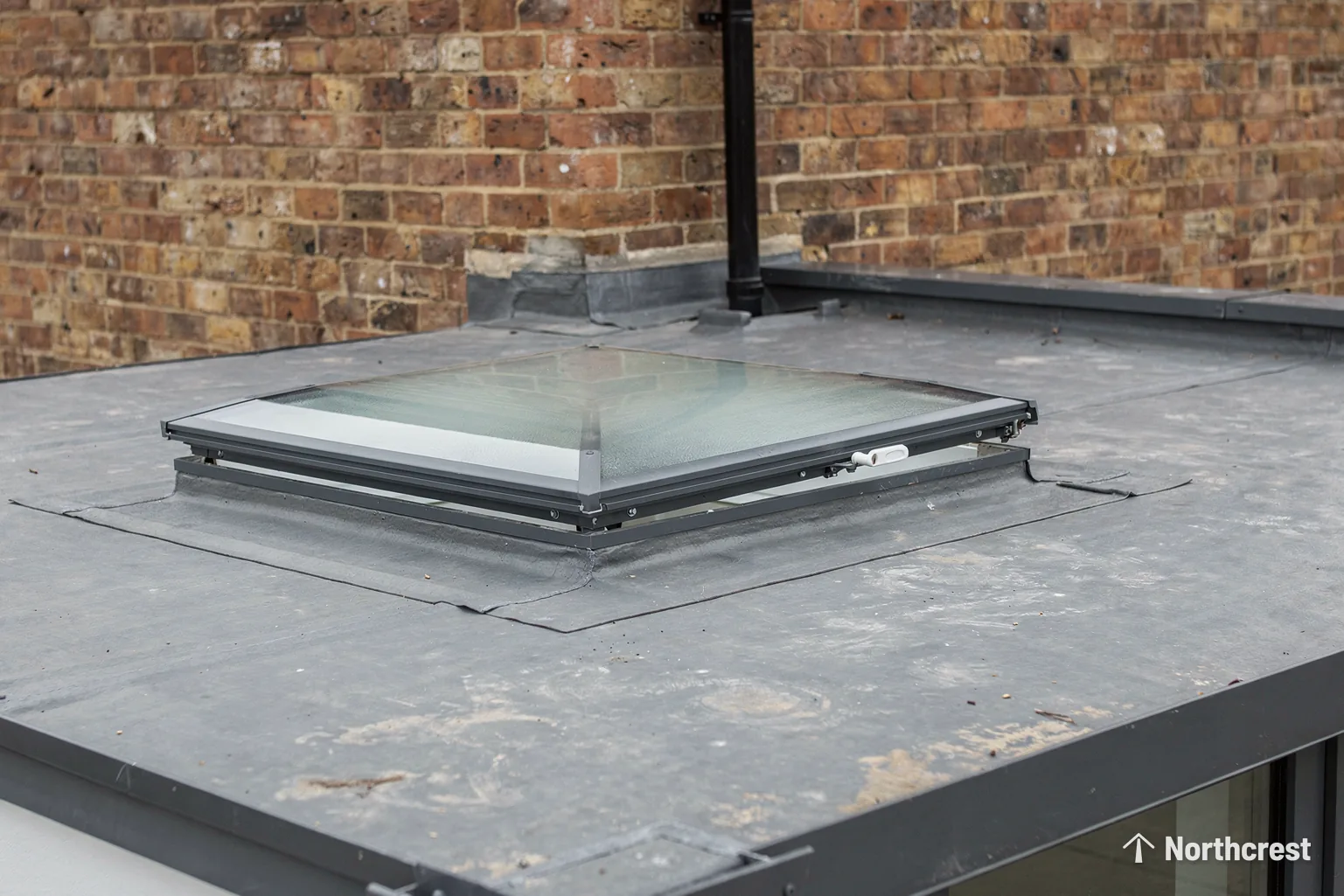
The roof is the part of the job that varies most from one house to the next. A rooflight in a slate or tile roof needs a flashing kit matched to the covering and the unit. A unit in a flat roof stands on a kerb that has to be built or reused, and its felt, rubber or fibreglass covering is turned up the sides. Access matters as well: a roof that can only be reached over a neighbour's yard or through a narrow passage makes the work slower.
If the job is a replacement, the existing opening may suit the new unit, or it may need altering. A new opening is structural work. The planning position for a rooflight on a house is covered in the planning rules for skylights.
Inside, the opening is made good and the reveal is plastered. A rooflight high over a stairwell or in a vaulted room can also call for tower access inside, and that effort goes into the price as well.
Getting a figure you can rely on
Ask any firm for a fixed written quote rather than an estimate, and ask what the quote names. Ours is fixed in writing and covers one room, one unit and one size, so you can set it beside another firm's quote for the same room. The wider picture of what shapes the price of any rooflight is on our costs page, and the overview of these units is on the electric and opening rooflights page.
The free survey is where the figures come from, because the room, the roof and the supply all have to be seen. The guarantee on our workmanship lasts 10 years. To start, send the details through the quote form.