The answer
Roof lantern planning permission is often needed, because the ridge of a lantern generally climbs far past the 150mm projection allowed for a rooflight under permitted development. On a new extension the lantern can be drawn into the plans so the extension's own permission covers it. On an existing roof, ask the council first. Building Regulations apply either way.
Why a lantern often falls outside permitted development
Rooflights on a house are usually permitted development under the roof alterations class of the General Permitted Development Order. One condition is that the unit projects no more than 150mm beyond the plane of the roof. A flat rooflight can meet that. A lantern is a pitched glazed structure standing on a kerb, and its ridge climbs far above that height, so it often falls outside those rights and needs permission of its own.
It is easy to assume a lantern is covered because a rooflight is. The safer way to treat it is as a question for the council until it has been answered. The full list of conditions sits in our planning and Building Regulations guide, so it is not repeated here.
A new extension or an existing one
When the extension is still on paper, the lantern belongs on the drawings. If it is shown in the plans and permission is granted, that permission covers the lantern, and nothing further is needed for it. Telling your architect or builder early also lets them frame the opening in the roof before the covering goes on.
On an extension that is already built, the position differs. The question is whether the lantern, as a new addition, needs permission. The council that answers is Leeds City Council for homes in the city, or the council for your own town further out. Ask in writing, say how high the lantern will stand above the roof, and wait for a reply before anything is ordered.
What the council looks at
Planning officers are looking at the finished appearance of the house. For a lantern that means three things: how far it stands above the flat roof, where it sits on the roof, and what it can be seen from.
When a lantern does need permission, the council weighs its height, its position on the roof and how it looks from the street and the neighbours. A lantern set back from the edge of a single-storey roof draws less attention than one close to a boundary. On a terrace, the windows next door are part of that picture.
Planning a lantern into extension drawings
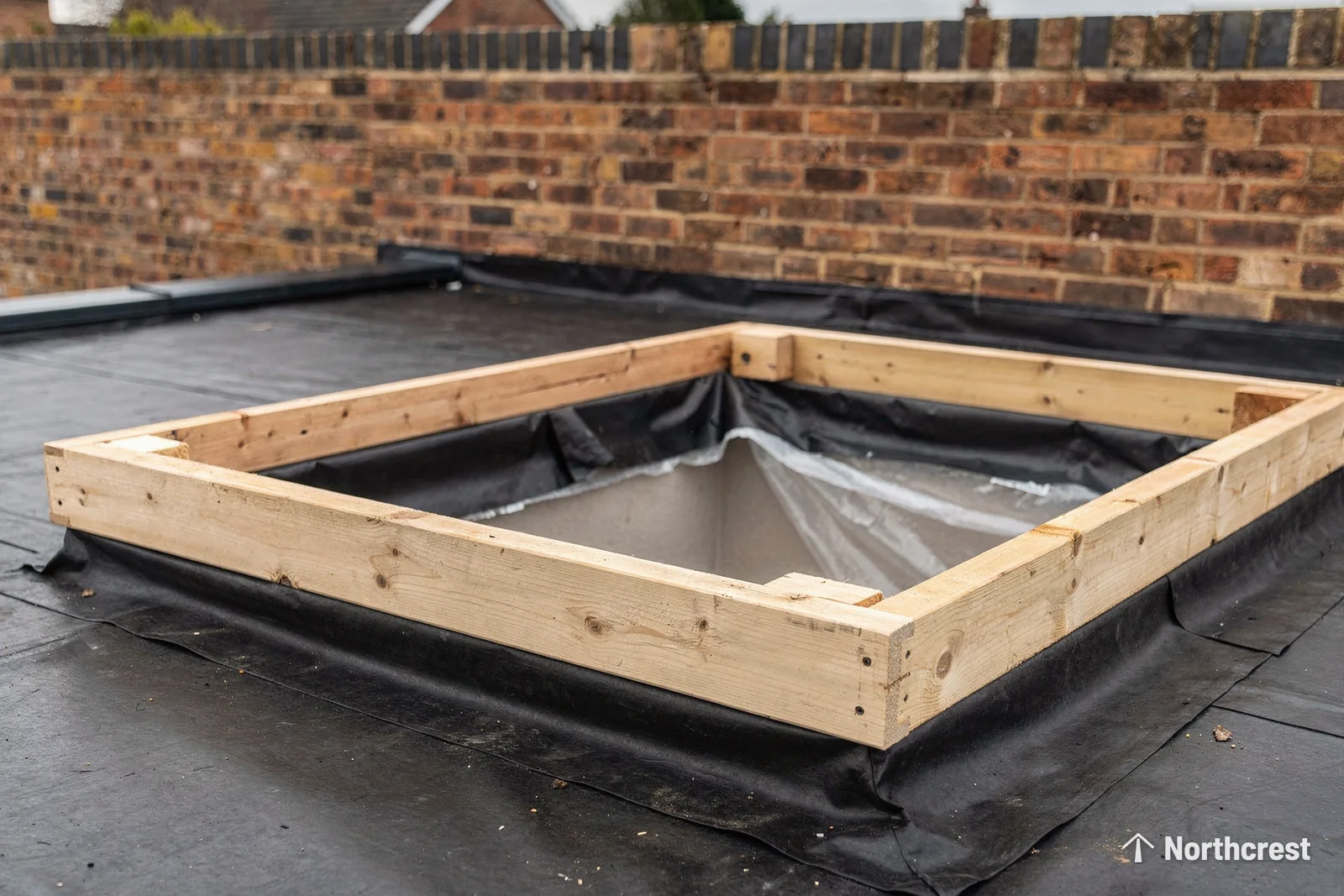
Give your architect the lantern's overall height as well as the size of the opening. The kerb adds to the height, and the council reads the drawings against what is built. A lantern shown at a lower height than the one fitted can cause trouble later, so the drawings should carry the figure from the maker's data sheet for the unit that will actually be installed.
Flats, conservation areas and listed buildings
Some homes sit under tighter rules, whichever lantern is chosen.
- Flats and maisonettes. Permitted development for roof alterations does not reach a flat, so permission is usually needed; ask the council.
- Conservation areas. An Article 4 direction can take away permitted development rights in some conservation areas, so ask the council before ordering any rooflight or lantern.
- Listed buildings. Listed building consent is required for a new rooflight on a listed house, whatever permitted development would otherwise allow.
A lantern sits on a flat roof, and many flat roofs in Leeds belong to modern extensions, but the house they are attached to can still lie in a conservation area or be listed. If you are unsure, the conservation-area position is covered in rooflights in conservation areas.
Building Regulations apply either way
Planning and Building Regulations are separate systems. A lantern that needs no planning permission still has to meet the Building Regulations, because a new opening in the roof changes its structure and counts as notifiable building work under Approved Document A. Replacing an existing lantern is notifiable too. In both cases we take on the Building Control notification, and the Building Control body may be the local authority or a registered building control approver.
The energy side is Part L, which sets a U-value limit of 2.2 W/m²K for a new lantern. How far under the limit the unit comes depends on the glass and frame you pick, and the guide to aluminium or uPVC roof lanterns covers the frame side.
What we do at the survey
At the free survey we look at the extension, the height the lantern will reach and the house it is attached to. If the house is in a conservation area, listed, or a flat, we say so and you ask the council before an order goes in. The height question runs through roof lantern sizes, and the whole job is set out on the roof lantern installation page.
The written quote you receive is fixed, and it sets down the room, the lantern chosen and its size. To arrange a survey, use the quote form and mention whether the extension is built or still being planned.