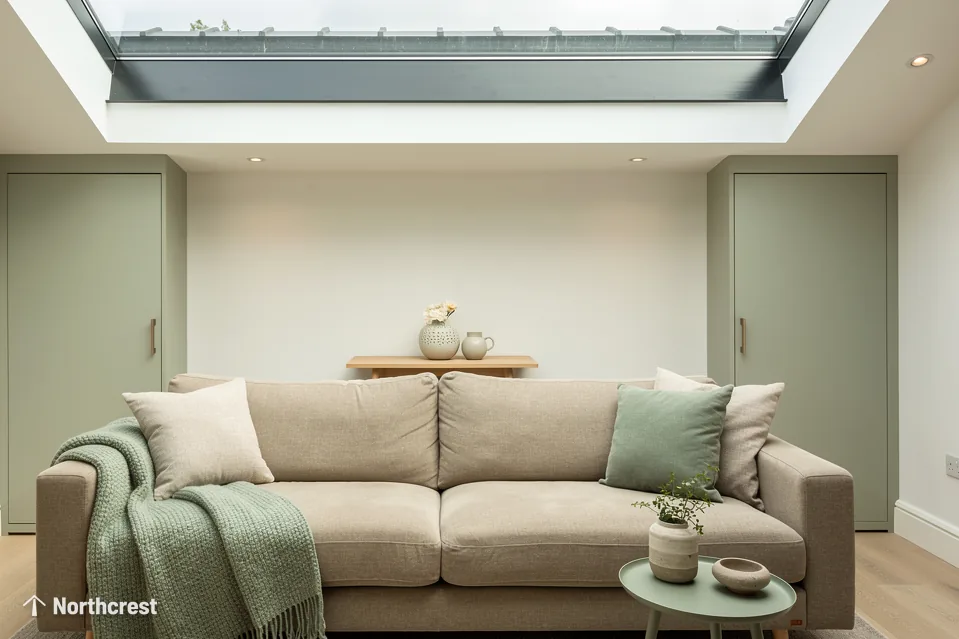
Three kinds of rooflight glass
A triple glazed rooflight has three panes of glass with a sealed gap between each pair, where a double glazed one has two panes and a single gap. Solar control is a different kind of choice, because it describes a coating on the glass instead of a count of panes. A double or a triple unit can carry it. When people ask which glass to choose for a skylight, they are usually asking two questions at once: how much heat should stay in during winter, and how much sun heat should be kept out in summer.
The two questions pull in different directions. The glass that holds the most warmth in is not automatically the glass that keeps a south-facing room cool, and the reverse is also true. Which one matters more depends on the room, so this guide goes room by room instead of ranking the glass. The figures behind these choices, and how heat loss is measured, are in the U-value guide.
Every option below is a variation on the same sealed unit. Panes are held apart by a spacer bar and the gap between them is filled with a gas, commonly argon, which carries heat across more slowly than air does. A low-emissivity coating, a thin invisible layer on one surface of the glass, reflects heat back towards where it came from. That is the base from which the three choices are built.
Double glazing as the starting point
The base specification is a double-glazed unit with a low-emissivity coating, a gas fill and a warm-edge spacer for a new or replacement rooflight, and it is the build from which the Part L ceilings for roof windows and rooflights are usually met. Because it is the lightest of the three builds, it fits the widest range of frames, and it is the build that opening and electric units are usually designed around.
The coating is worth a word on its own. In winter it sends part of the room's heat back into the room, so the inner pane stays warmer and the glass feels less cold to stand under. A warmer inner pane also gathers less condensation. In summer the same coating does less against sun heat than a solar control coating does, because it is designed to keep warmth in.
For a landing, a stairwell or a small bathroom that sits away from the strongest sun, good double glazing is often all the room asks for. The extra pane of a triple unit would add only a small gain there, and the daylight it absorbs is worth more to a room whose only light comes from the roof.
Where a triple glazed rooflight helps
The third pane and second gap cut heat loss further, and they make the inner surface of the unit warmer again. That helps in three situations.
- A room that is heated all day and sits under a roof that takes the full wind, such as a loft bedroom or a home office on an exposed hillside.
- A rooflight on a north-facing slope, which gets little direct sun in winter to offset the heat it loses.
- A bathroom or kitchen where warm, damp air meets the glass, because a warmer inner pane gathers less moisture.
The extra pane has costs of its own. The unit is thicker and heavier, which the frame and the kerb or rafters have to be able to carry. Each additional pane also takes a little of the daylight, so the room gets slightly less light than it would through two panes. A triple unit is a more expensive product as well, and the quote reflects it.
Krypton and narrow gaps
Krypton conducts heat more slowly than argon, and it is used in the narrower gaps found in some triple units, where argon would work less well. It adds to the price of the glass. The sheet from the maker names the gas for each build, and where it does not, the question is worth putting to the supplier.
Weight and opening units
An electric or manual opening rooflight has to lift and lower its glass, and a heavier pane build asks more of the motor or the hinge. Each maker states which glazing options suit which models, and that list limits what can be chosen for an opening unit. A fixed rooflight has no moving parts to consider and can usually take the heavier build, subject to the frame.
A triple glazed rooflight on a north slope has little sun to offset the heat it loses, so the third pane suits that slope better than a south one.
Solar control glass for rooms that catch the sun
Solar control glass has a coating that turns away part of the sun's heat before it enters the room. Makers rate this as a solar factor: the lower the number, the less sun heat comes through. The coating can be added to a double or a triple build, and it often gives the glass a faint tint, from a light grey to a pale green or blue depending on the make.
The coating is aimed at summer. A rooflight faces the sky, and in July the sun is high, so the glass takes a direct blast of heat in the middle of the day. A kitchen under a south-facing lantern or a flat rooflight, or a loft room under a south slope, can warm up fast without it. Shading and ventilation work alongside the glass, and the answer on rooflight overheating goes through them.
What you give up
Solar control glass has two trade-offs. It lets in a little less daylight than clear glass, since reflecting sun heat means reflecting some light with it. It also turns away some winter sun, which on a bright day in February would have helped warm the room. Both are small in a room that gets strong sun and worth thinking about in one that does not. A room that already struggles for light, such as a north-facing landing, gains nothing from a coating built for sun it never receives.
Choosing by the direction the roof faces
For a roof window or a lantern with sloping sides, the direction the glass faces sets how much sun it takes. A flat rooflight lies level and takes the sun from whichever direction it arrives, so its aspect matters less than the open sky above it and anything that shades it, such as a tree or a taller neighbour. The table sets out a leaning for each case, and the survey checks what actually shades the roof.
| Room and roof | Sun it takes | Glass to lean towards |
|---|---|---|
| Kitchen extension, south-facing lantern | Strong, much of the day | Solar control, double or triple |
| Loft bedroom, west slope | Hot late afternoon sun | Solar control double |
| Loft room, east slope | Morning sun only | Low-emissivity double |
| Landing, north slope | Little direct sun | Low-emissivity double or triple |
The table is a starting point for the conversation about your roof, and every row has exceptions. A south slope shaded by a large tree may not need solar control, and a north room that is heated hard all winter may want the third pane more than the table suggests.
Choosing by how the room is used
Use matters as much as direction, because it sets when the room is occupied and how it is heated.
Bedrooms under the roof
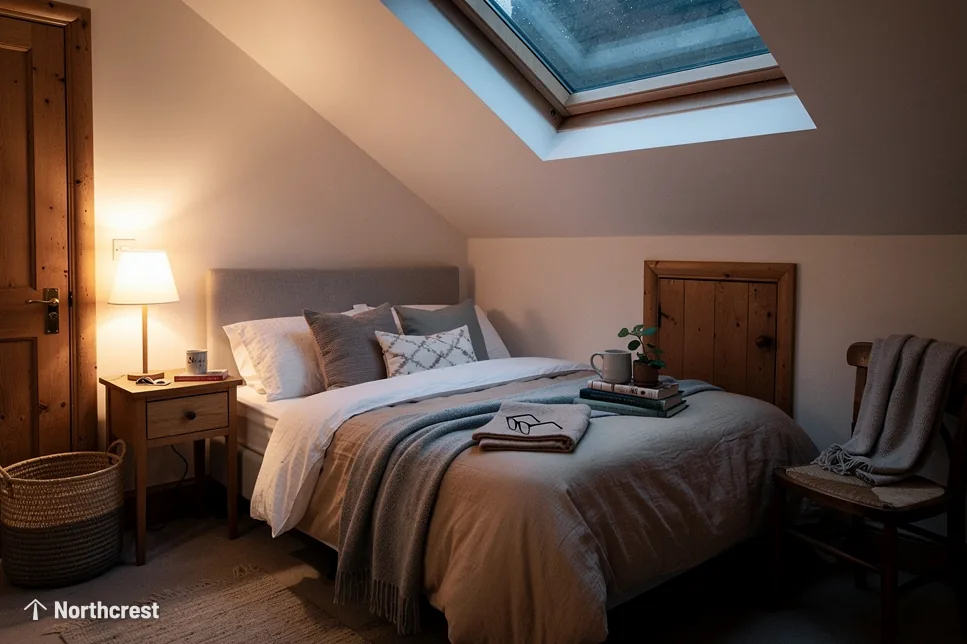
A bedroom is used at night and in the early morning, so heat retention counts for more than sun control. A west slope that bakes in the afternoon is empty then, but it can leave the room warm well into the evening, which is when solar control starts to help. An east slope wakes the room early, and blinds may matter more than the glass.
Kitchens and living rooms
These rooms are occupied through the warmest part of the day, so a lantern or flat rooflight over them sees the sun while people are in the room. Solar control suits a kitchen that faces south and a living room that faces west, and an opening vent beside it lets the warmest air out.
Landings, halls and bathrooms
These are rooms people pass through, or use for short periods, and the first aim is to bring daylight into a space with no window of its own. Clear low-emissivity double glazing keeps the most light. The room rarely overheats because nobody stays in it, so the extra benefit of solar control is small.
Home offices
A desk under a south-facing rooflight can suffer from glare as well as heat. Solar control reduces both, and a blind handles the rest. Where the screen sits matters too, since a monitor facing the glass picks up reflections whatever coating is on it.
Shading and ventilation alongside the glass
Glass is only one of the tools for keeping a room comfortable. A blind fitted outside the glass stops sun heat before it reaches the pane, which an inside blind cannot do, because an inside blind catches the heat after it has already entered. VELUX and other roof window makers sell external blinds and awnings made for their own models, and each lists which unit takes which. An inside blind still cuts glare and gives privacy at night.
An opening unit adds the third tool. Warm air rises, and a vent set high in the roof lets it leave while cooler air comes in lower down, from a window or a door. A fixed rooflight cannot do that, which is why the question of opening or fixed belongs next to the question of glass, and is covered in our section on electric and opening rooflights.
Frames, safety and fitting
The glass sits in a frame, and the frame belongs in the choice. Aluminium frames are slim and strong, and a thermal break separates their inner and outer faces so the metal does not carry cold into the room. A laminated inner pane holds the pieces in place if overhead glass breaks. The maker's sheet states which build each model has.
Planning and paperwork do not change with the glass. A new opening alters the structure of the roof and a replacement is notifiable under the energy rules, so our team deals with the Building Control side in either case, and the choice between double, triple and solar control is yours to make alongside the roof, the room and the budget.
The price is fixed in writing against the room and a named unit and size, so the glass you have chosen is settled before the job begins. On the inside we make the opening good, plastering the reveal and decorating it as agreed, and a ten-year guarantee on the workmanship stands behind the fitting. To talk through the glass for your own roof, message us on WhatsApp at 07880 284133. Homes and small commercial roofs within 30 road miles of Leeds are covered.