The answer
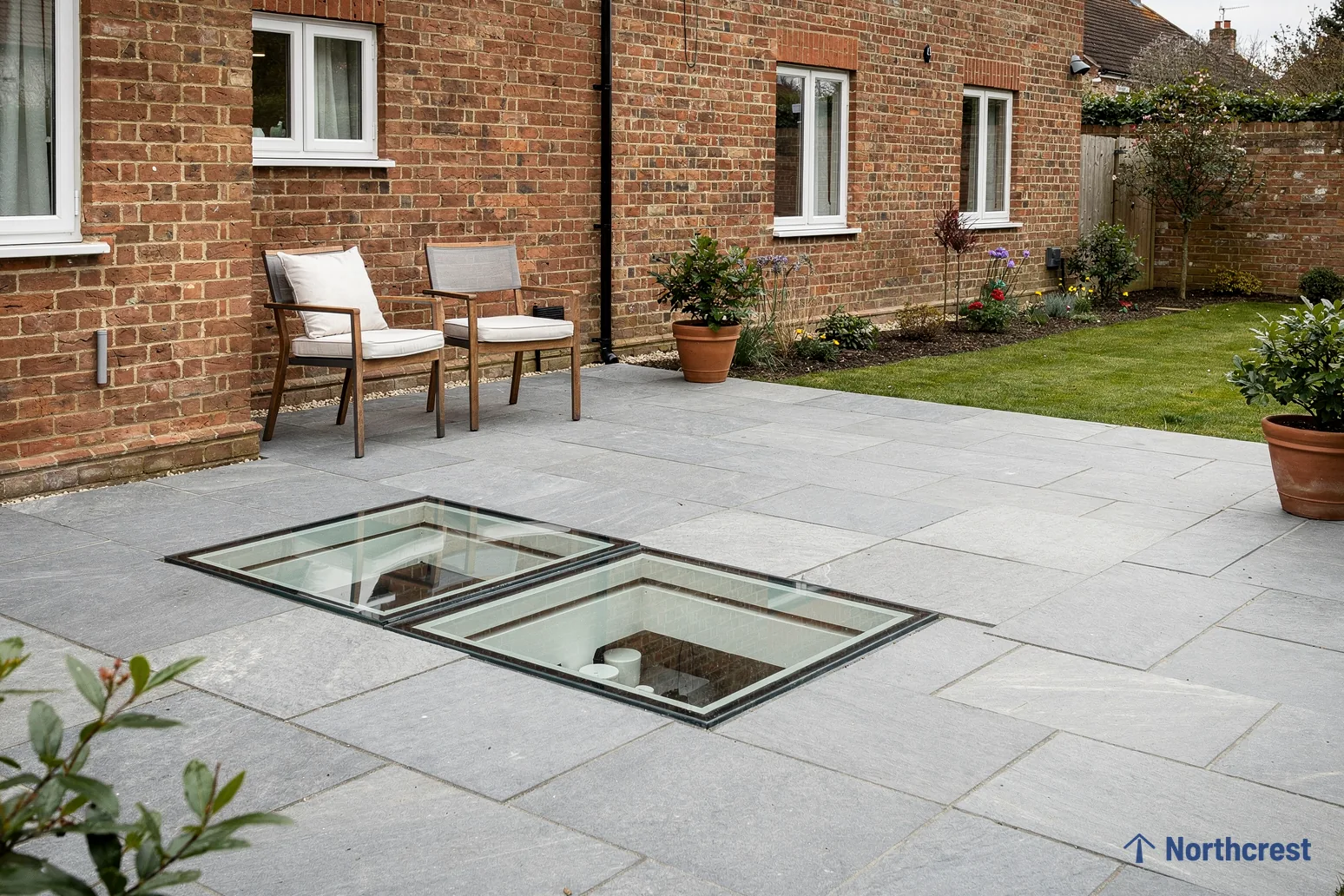
Walk-on rooflight cost depends on the size of the glass, the load class it has to carry, the glass build-up and anti-slip finish, the structural opening in the deck or roof, and the installation itself. We set the price after a free survey and write it into a fixed quote that identifies the room and the unit by make and dimensions.
Size and load class set the starting point
The first thing that moves the price of a walk-on rooflight is its size. A larger panel takes more glass, a bigger frame and a longer span to support, and the longer the span, the stronger the glass has to be. A small square panel for a light well and a long panel for a basement room are different products, and they are priced as such.
The second is the load class. Plain walking on a terrace sits in the lowest class of use. A rooflight that furniture, planters or a wheelbarrow cross is built to a higher rating, and one that a vehicle crosses is a heavier product again. A higher class means more layers of glass, a thicker unit and a stronger frame. We ask how the surface above the room will be used, because that sets the class before any other choice is made, and what each class means is explained in walk-on rooflight load ratings, laminated glass and grip finishes.
Neither of these is a luxury to be trimmed. A panel that is too light for its use is the wrong panel, however low the price looks beside the others.
What the glass and its finish add
Walk-on glass is laminated and toughened, so even the plainest unit is a build-up of several sheets, and it costs more than a standard fixed rooflight of the same footprint. Three choices on top of that move the figure.
- Double or triple glazing. Double glazing with a gas fill is the starting point for a room that is heated. Triple glazing adds a sheet and a gap, lowers the U-value further and costs more.
- Coatings. A low-emissivity or solar-control coating adds to the price of the unit, and suits a south-facing terrace over a room that overheats.
- The anti-slip finish. A fired ceramic pattern, an etched surface and a coated grit layer differ in price as well as in look.
Building Regulations limit how much warmth a rooflight newly fitted in an existing home can lose, with a U-value of 2.2 W/m²K as the ceiling, so the glazing has to meet that figure and a better build-up takes the unit below it. The frame is a smaller factor: aluminium is slimmer and stronger, and a powder-coated colour from the maker's range suits the paving around it.
The opening in the structure
A walk-on rooflight goes into a deck, a slab or a flat roof, and cutting a hole in any of them alters the structure that holds it up. That work is a real part of the figure, and it varies more between houses than the glass does.
Joists or a slab that are cut have to be carried round the opening on trimmers or a beam. A wide panel across several joists calls for heavier trimming, and a structural engineer may specify the timber, steel or concrete detail. A panel set between the existing joists, or over a gap already in the structure, costs less to carry. Over a ground-floor room or a basement there can be a concrete slab to cut through, which needs different tools and a different method from a timber deck.
On top of the structure sits the upstand, the raised support round the opening. It has to be level, strong enough to carry the glass and insulated, and the waterproof covering is dressed up its outside. Where the existing covering is tired, renewing it at the same time keeps the glass and the terrace weathered as one job. A new opening in a roof or deck is structural, so we notify Building Control, and that is part of the job we price.
Fitting, access and making good
Glass of this thickness is heavy. Getting a large panel to a rear terrace may mean a route through a side passage, a crane lift or a hoist, and the time it takes to lift the unit into place is part of the installation. A terrace at the top of a house is harder to reach than a patio at the back door.
Inside the room, the opening is lined and the reveal plastered, so the ceiling looks finished. That is the same finish whether the room is a basement, a hall or a kitchen. Outside, the paving or decking has to be cut and relaid to the frame, which adds to the work on a terrace with a patterned or fixed surface.
The guarantee page sets out how our ten-year guarantee covers the fitting.
How the price is fixed
The same panel costs different amounts in different houses, so the price is set at the free survey, where we look at the room, the surface above it and the structure between the two, and then write one fixed quote. It stays as written once you agree it.
The cost factors that apply to every skylight and rooflight are set out in the skylight and rooflight cost guide. For the rest of this subject, the walk-on rooflights in Leeds page covers types, finishes and fitting, and the guide to lighting a basement through a walk-on rooflight follows the daylight down to the room. To ask for a survey, use the quote form at get a quote.